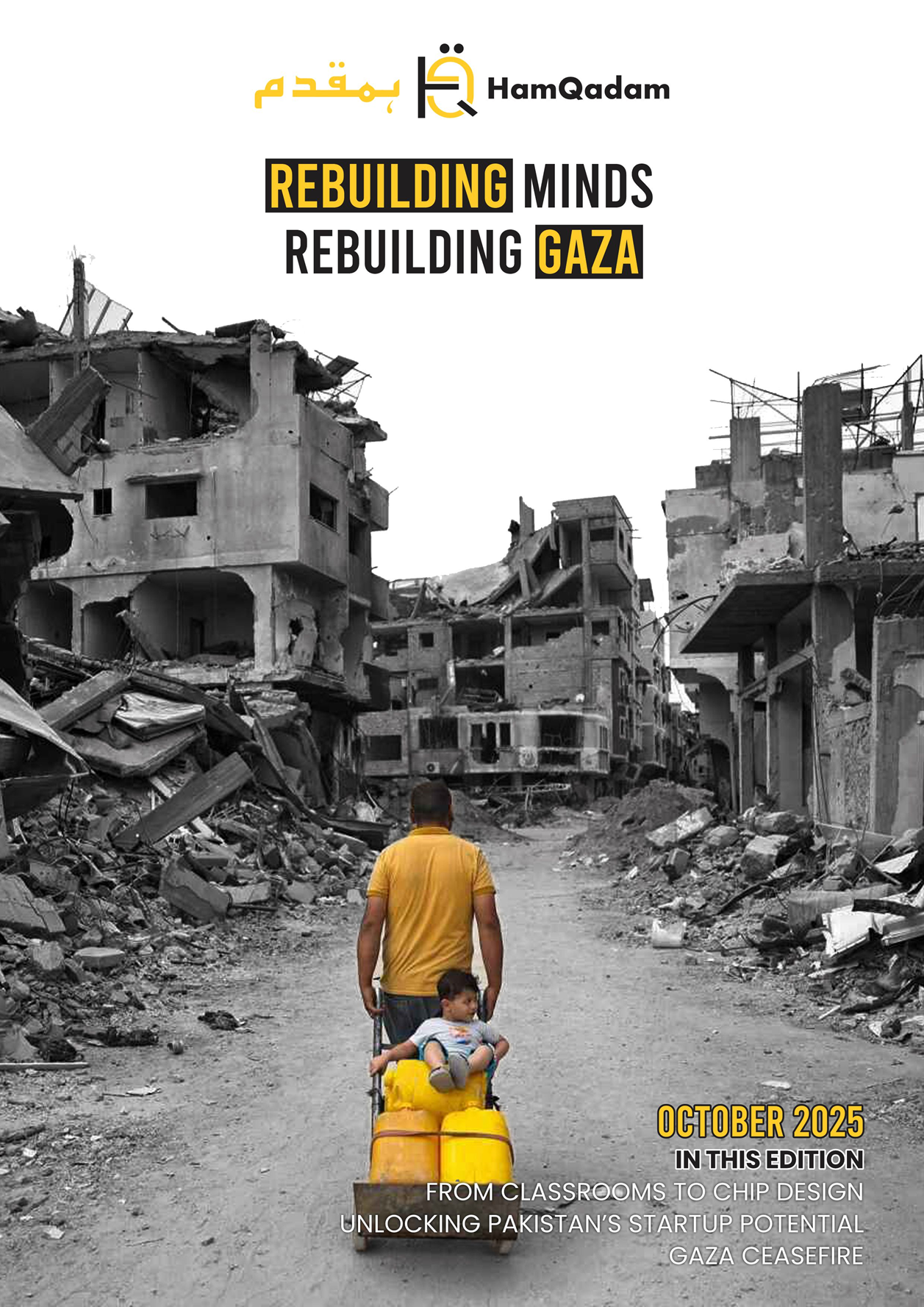
Imagine being a student in Gaza, where bombs have left classrooms in ruins, laboratories silent, and libraries reduced to rubble. The young minds who should be exploring physics, coding, or medical research instead face uncertainty and despair. Across the world in Pakistan, students follow the news, wondering how they could make a real difference beyond hashtags and online petitions. On October 17, 2025, Pakistan hosted the first-ever Palestine–Pakistan Rectors’ Forum, pledging 5,000 scholarships to Gaza’s youth. This initiative was more than diplomatic goodwill—it was a concrete plan to restore education, rebuild intellectual capacity, and foster future leaders. For Pakistani students, the forum poses a question: how can we transform empathy into action, not just for Palestine but for all marginalized students facing crises worldwide?
Deep Dive Sections
Why This Issue Exists
Gaza’s education system has been under siege for decades, with cycles of conflict repeatedly destroying infrastructure. Beyond the physical damage, an entire generation has experienced “education disruption,” where opportunities for learning, research, and skill development are systematically denied. These setbacks are not only political—they undermine the intellectual, scientific, and ethical growth of youth who could otherwise drive societal progress.
Scholarship programs like Pakistan’s 5,000-fellowship initiative directly counteract these barriers. By providing access to higher education, research collaboration, and faculty training, they tackle both immediate educational deficits and the long-term intellectual vacuum that conflict imposes. For Muslim students in Pakistan, understanding this global dimension of educational solidarity is a form of civic and ethical responsibility.
What Students Often Get Wrong
Many Pakistani students feel limited in their ability to help. They often rely solely on social media campaigns, donations, or passive advocacy. While well-intentioned, these actions rarely create systemic change. Real impact requires strategic thinking: leveraging knowledge, research, and professional skills to contribute to rebuilding initiatives.
The Rectors’ Forum shows that policy and institutional support can multiply student efforts. Scholarships and exchange programs are more than access—they are platforms for students to engage in meaningful research, humanitarian initiatives, and long-term collaborations that can revive academic ecosystems in conflict zones.
Impact on Muslim Identity and Society
Supporting Gaza through education is both a moral and intellectual act aligned with Islamic values of knowledge (ilm) and justice (‘adl). Prophet Muhammad ﷺ emphasized the transformative power of learning, stating that seeking knowledge is obligatory for every Muslim. By connecting with peers in Gaza, Pakistani students embody this principle, demonstrating that Islamic solidarity extends beyond rhetoric to tangible societal impact.
Moreover, global student engagement builds a sense of shared responsibility. Pakistani students become part of a knowledge-driven ummah, contributing to ethical leadership, scientific advancement, and cross-border problem-solving. It reinforces the idea that Muslim identity is not passive; it is active, reflective, and globally conscious.
Global and Pakistani Context
The Rectors’ Forum reflects a broader trend: higher education is increasingly recognized as a tool of diplomacy and soft power. Pakistan’s initiative aligns with global standards of educational solidarity, similar to initiatives by Turkey, Malaysia, and Qatar in crisis-hit regions. For Pakistani students, understanding this context highlights opportunities for internships, joint research, and cross-border innovation projects.
On a local level, students participating in these initiatives can develop competencies in project management, academic networking, and technical skills—bridging classroom learning with real-world impact. The forum demonstrates that youth are not just recipients of education—they can be active contributors to rebuilding global academic communities.
Closing Reflection
The Palestine–Pakistan Rectors’ Forum is more than a diplomatic milestone; it is a blueprint for student-led global solidarity. By turning empathy into action, Pakistani students can help rebuild not just the infrastructure of Gaza’s universities, but the intellectual and moral foundation of a generation. Islamic ethics, when coupled with strategic academic engagement, shows that knowledge is both a tool of empowerment and a bridge across borders. For students, this is a call to responsibility: to be learners, innovators, and leaders who respond to global crises with actionable solutions. When the next generation of Pakistani youth steps forward, they do so not as bystanders, but as architects of a resilient, knowledge-driven, and ethically grounded Muslim world.