In the West, the direct confrontation of states is no longer a military matter, but apparently even the united powers of the West are now facing each other. It apparently began with the change in the US position in the Russia-Ukraine war when President Trump suddenly indicated that the US could no longer go any further in this war, after which a wave of serious concern spread throughout Europe. After the acrimony that ended with the meeting of Ukrainian President Zelensky at the White House, Europe had understood that the US and Europe may have parted ways, but even in order to abandon a long-standing friendship, states have to travel a long distance. This is why, despite the strong reaction from Ukraine to this meeting, the main US allies Britain and France continued to strive to ensure that these relations did not end in bitterness in the parting ways. This was the reason why British Prime Minister Sir Keir Starmer showed all possible cheerfulness during his visit to the US to make it possible for the US to stand behind Europe.
Further tension arose in these relations when European countries also adopted a joint strategy after the announcement of recognizing Palestine as a state. In addition to Germany, European countries including France, Britain, Spain, Ireland, Canada, and Australia finally recognized Palestine as a state under public pressure, to which the strongest reaction was from Israel and the United States.
The role of social media as a whole has been one-sided in the atrocities committed against the Palestinian people. There have been reports of major social media networks either completely shutting down important social media accounts under one pretext or another or removing any content on the basis of violating their policies. Detailed reports have been prepared on this, which contain details about why, when, and at what point all the content and accounts were shut down. There have been several attempts to hold these social media networks accountable on this issue, but each time they have escaped under the guise of US laws. Especially in the case of removing posts regarding Hamas, these platforms have taken the position that it is a terrorist organization in the eyes of the US state and because the main offices of these platforms are in the US, they are forced to abide by US laws. In this regard, a more important debate has begun: how can the media, which is not only working all over the world but is also influencing the world, apply it to all countries based on the law of one country? So how can the global monopoly of the media be controlled? Are all countries helpless before American laws? We have two examples in this regard. The first example is from China, where American social media networks were completely shut down and alternative social media platforms were created… and the second example is from Europe, where independent institutions were created that could regulate social media, similarly, in the West itself, many institutions or watchdogs came into existence to monitor social media that work independently. In this regard, the Digital Services Act in Europe is the law that sets the boundaries of social media and they can be held accountable under this law. This act was implemented in 2024, after which systematic accountability began on all social media networks and online platforms. The scope of the Digital Services Act is:
*Reduce illegal and harmful content online.
*Tackling hate speech, misinformation, and extremist content.
*Ensure transparency in algorithms and digital advertising.
*Protect consumer rights and strengthen platform accountability.
The law applies to all online intermediaries operating in the European Union, but imposes stricter obligations on very large online platforms (VLOPs) such as X, Meta, Google, TikTok and Amazon.
In addition, the practical procedures of the Digital Services Act also include the obligation to bind online platforms to the following matters:
*Online platforms should conduct regular risk assessments to assess how their algorithms spread harmful content and promptly remove illegal content when notified. These platforms should provide transparent information about content monitoring and recommender systems. They should allow for independent audits and share data with regulators and approved researchers.
In case of violation of these matters, fines of up to 6% of global annual revenue can be imposed on these platforms as a penalty.
The person who implemented this entire act or law is Thierry Breton, who is also the former European Commissioner for the Internal Market. He has played a crucial role in making it a formal law with great dedication.
After the practical implementation of this law, the situation now is that no social media network or online platform is beyond its reach, and in case of violation, they will have to face the consequences.
Now the situation in the West itself is that on one side there are American laws and on the other side there are European laws… That is, now online platforms will have to bear the double pressure of laws, and now they cannot absolve themselves by simply using American laws as an excuse. Another perspective of this is that now the door to direct intervention through the media has been closed and many responsibilities have been imposed on the online media by binding it to some regulation or the other, based on which not only information can be checked but also the unbalanced flow of any particular type of information can be stopped. All this did not happen all at once, there is a long history behind it that goes back to the campaign for Britain to leave the European Union and the anti-Muslim riots that began in the summer of 2024 due to misinformation, in which social media acted as a catalyst… and false, ambiguous, and contextual information has led to riots in Britain, with Twitter owner Elon Musk playing a prominent role in this. He not only restored social media accounts that had been previously closed on the basis of extremism, but also added fuel to the fire of riots with his tweets. He also tried to directly create an atmosphere of rebellion against the British government. For this reason, the British police had announced that anyone who would be part of this fake news, including Elon Musk, would be brought from abroad and prosecuted.
After the implementation of these laws and the stricter control and regulations on social media by the British government, the US and Europe are now at odds with each other. The US says that the Digital Services Act and other similar laws are aimed at achieving desired goals by putting pressure on online platforms, which is against freedom of expression.
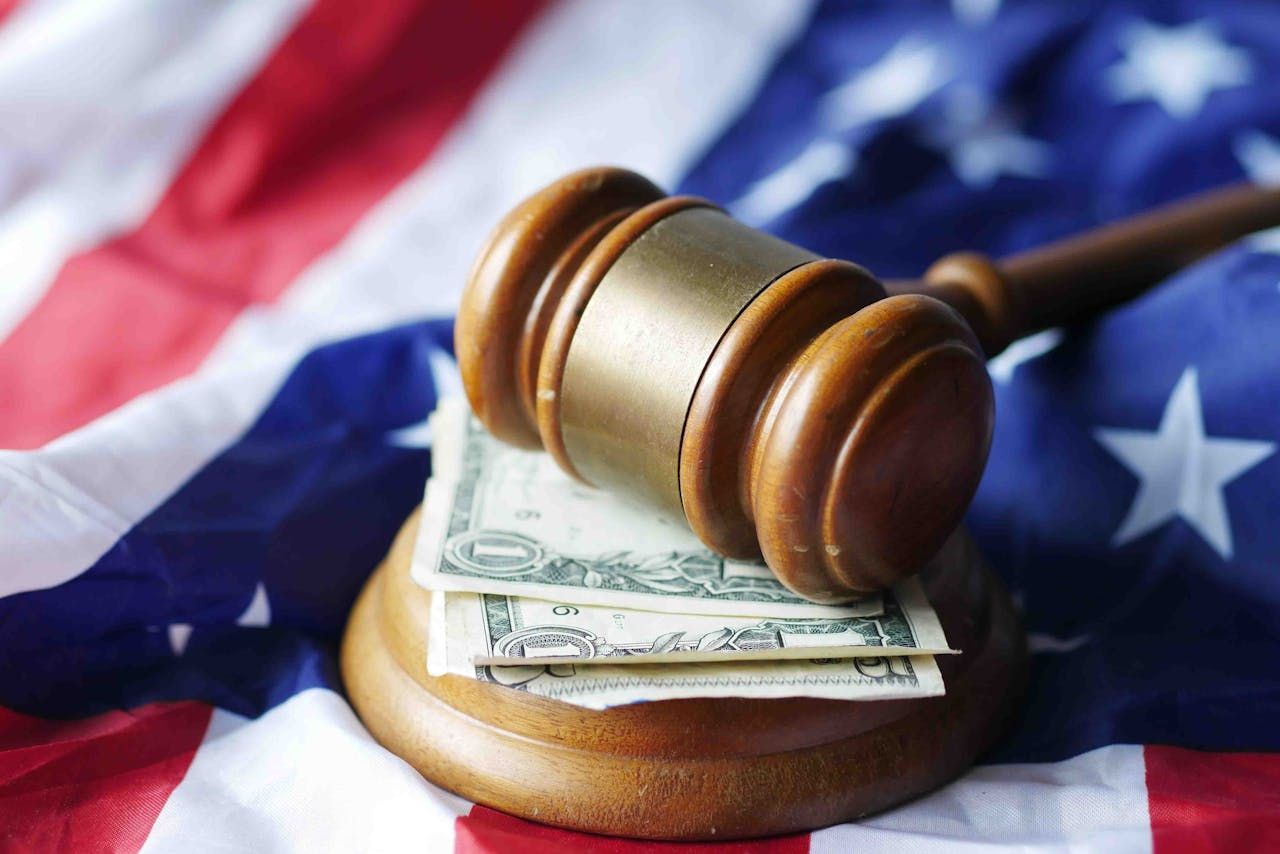
The US government has called this practice foreign censorship and a violation of the US First Amendment, which guarantees complete freedom of expression, while the European Union has rejected the accusation, saying that these laws were made democratically and are intended only to limit online hate, misinformation, and harmful content.
Now the US has gone a step further and imposed visa restrictions on former European Commissioner Thierry Breton and four other European figures, including British citizen Imran Ahmed. Imran himself is the chief executive of the Center for Countering Digital Hate, an independent and non-partisan organization that aims to analyze and monitor content on online platforms.
In addition, Anna-Lena von Odenberg and Josephine Ballon, leaders of the German non-profit organization HateAid, and Claire Melford, co-founder of the UK-based Global Disinformation Index (GDI), are now under visa restrictions. Their common crime, in the eyes of the US government, is that they have tried to censor American expression by pressuring American tech companies through European laws, particularly the Digital Services Act (DSA).
On the one hand, the US is imposing travel and visa restrictions on individuals affiliated with organizations that are trying to combat misinformation, while on the other hand, the US President himself has now announced a lawsuit against the BBC for spreading misinformation. His announcement came after a BBC Panorama broadcast a year ago combined two parts of Donald Trump’s speech to create a false context, which the head of the BBC network, Tim Davie, and the head of BBC News, Deborah Turness, not only accepted but also resigned voluntarily over this mistake. On the one hand, Donald Trump himself is a victim of this misinformation and is taking legal action against it, while on the other hand, those organizations that are busy with efforts to fight fake news and bind the media to ethics are linking it to freedom of expression or restrictions on the media.
At present, Europe and America are not only at odds with each other in the matter of defending Ukraine, but now this gap has deepened and has reached the front of the media. The Western media is no longer the representative media of the West, but even in this, the gap within the West is clear, what is acceptable in one place is no longer acceptable in another. This is the truth that the East itself has been expressing for a long time that there is a clear difference between your morality and ours, that is, the morality of the East, and the morality of the West alone cannot be declared the morality of people around the world.
The world is now seeing and understanding who wants to stop the spread of fake news and disinformation and who wants to tolerate all kinds of hatred and misinformation under the guise of endless freedom. It is no longer a secret because the West itself is telling how social media and online platforms create a mountain of rice based on algorithms and spread misinformation, and hide the truth or completely erase it. This confrontation on the media front in the West is a declaration that there is now a gulf in the West itself, and it is a declaration that the world is no longer unipolar, so everyone will redefine their own path and the end of the unipolar world has begun.
Western media may not be able to do as much unilaterally as they have in the past. If a country were to legislate on this issue, it could also prevent it. In this regard, the Digital Services Act is certainly a fundamental document whose echoes are now being heard around the world.