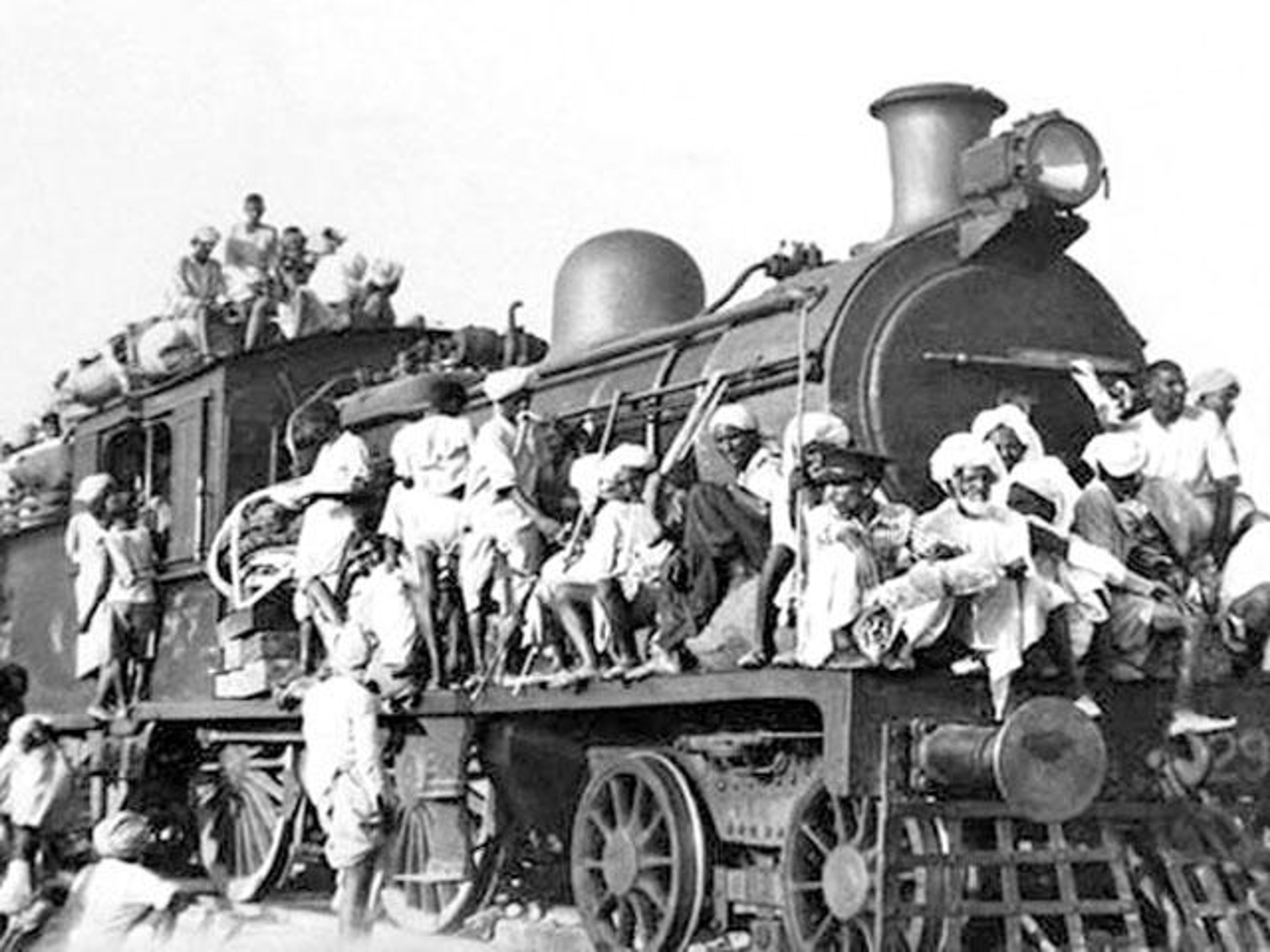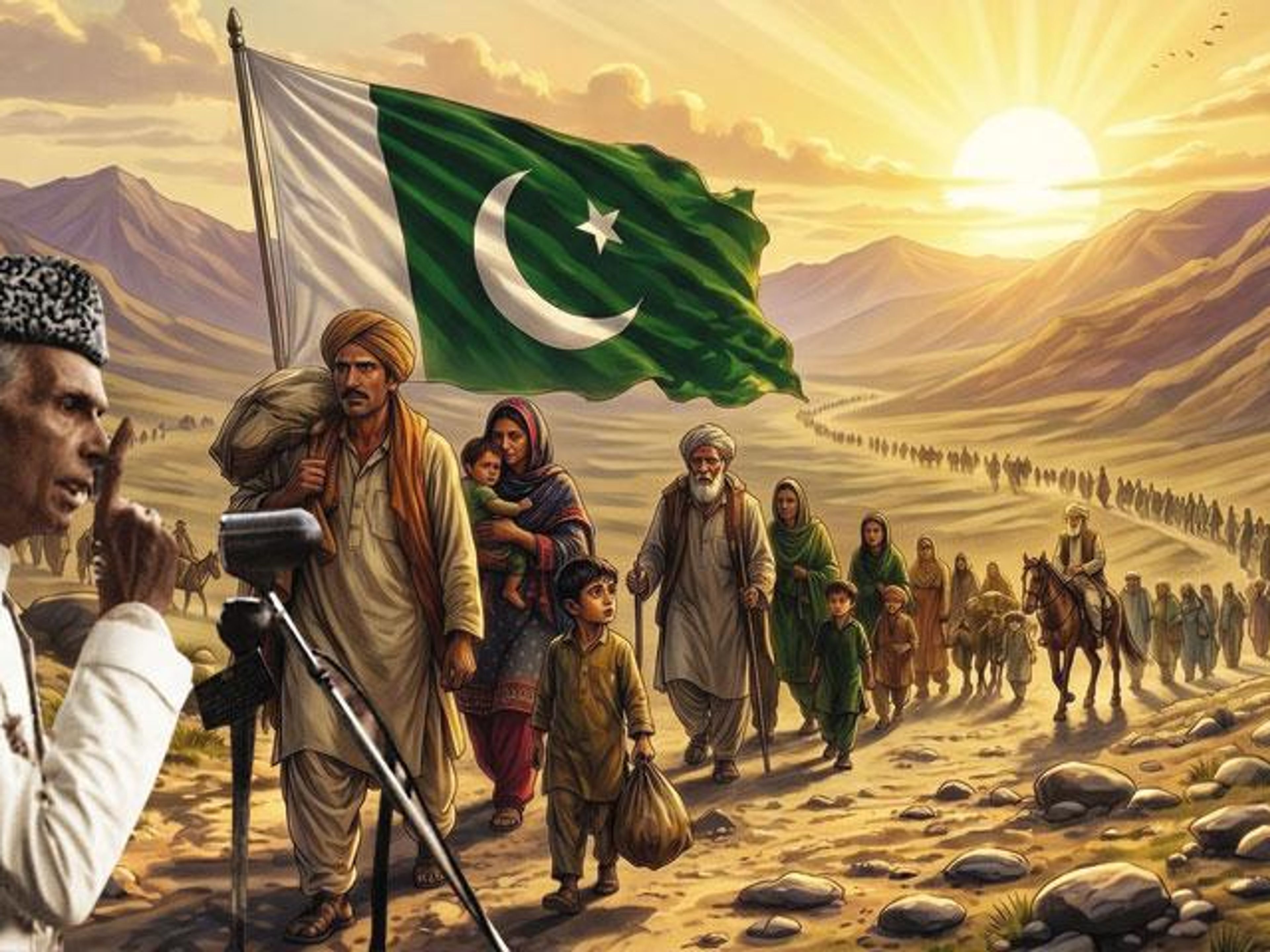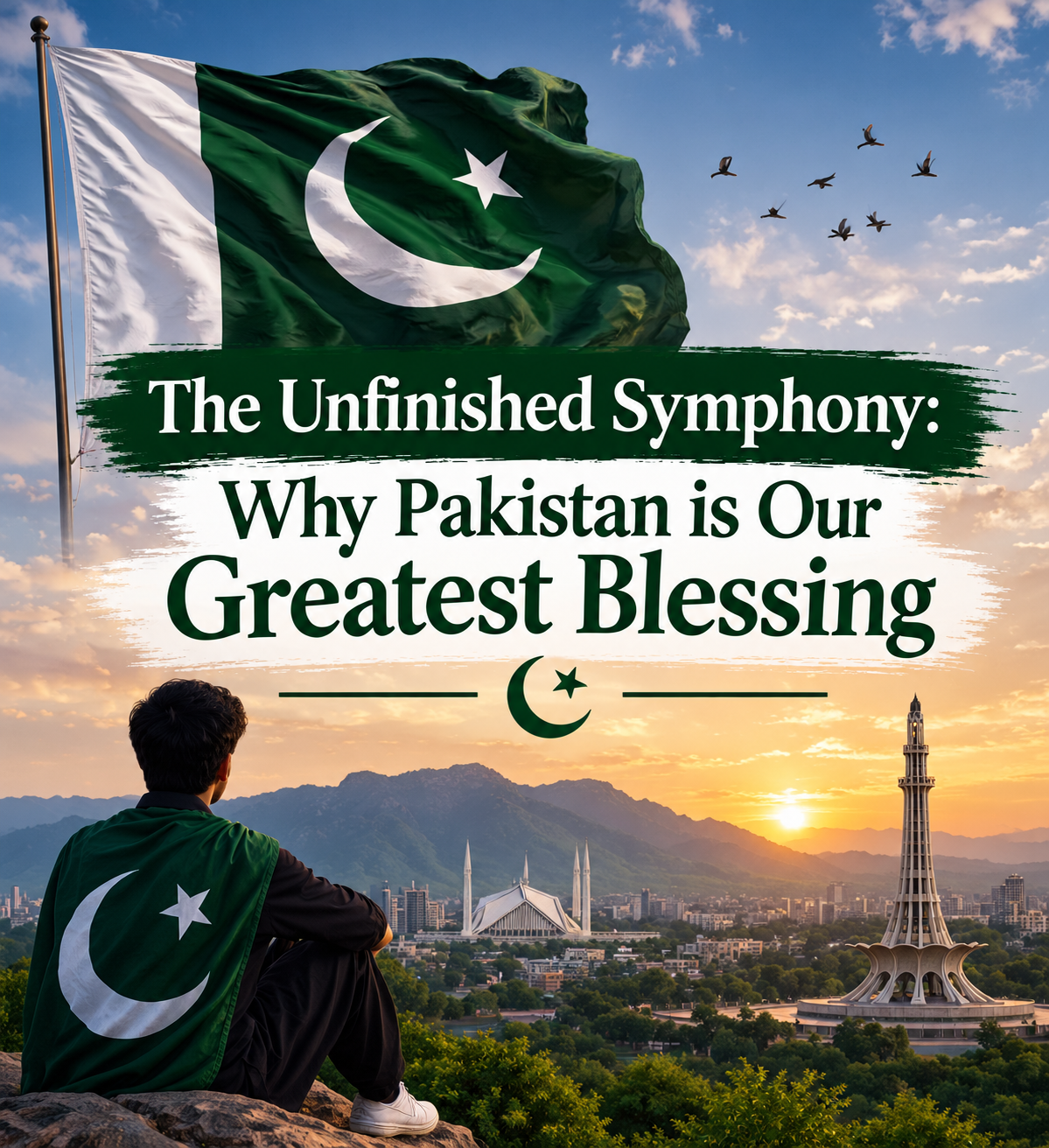
My grandfather was a teenager in 1947. He didn't just read about the creation of Pakistan in a newspaper; he lived the tectonic shift of it. He witnessed the migration, the sacrifice, and the sheer, defiant hope that birthed a nation. I am his grandson, a third-generation Pakistani, born into the reality he dreamed of. And from my vantage point in this dynamic, often chaotic, but utterly vibrant country, I can see what he saw: Pakistan is our greatest blessing.
For those of us who didn't know a world without Pakistan, the narrative can sometimes feel dominated by problems. We scroll through doom-laden headlines, debates on economic instability, and endless political noise. It’s easy to be cynical. But to be cynical is to be blind. It is to ignore the very air we breathe, which is the air of independence. It is to forget that our very identity, as Pakistanis, is a testament to the idea that we are a people with a distinct destiny.
This brings me to the bedrock of our existence: Quaid-e-Azam Muhammad Ali Jinnah. For Gen Z, Jinnah isn't just a stoic face on a currency note. He is the architect of our possibility. His vision was never about a theocratic state, as some mistakenly claim, but a homeland for the Muslims of the subcontinent where they could live with dignity, practice their faith freely, and contribute to a progressive, modern society.
He was right. The Two-Nation Theory wasn't a political slogan; it was a historical necessity. It was the acknowledgment that Hindus and Muslims, were two distinct nations with their own unique cultures, traditions, and ways of life, world view & what not. Jinnah understood that in a united India, Muslims would forever be a minority, their identity and aspirations subsumed. Pakistan was the guarantee of our survival, the canvas upon which we could paint our own future.
History has proven him right. The dream of a secular, unified India where all communities would thrive as equals has, tragically, not materialized for the region's Muslims. The violence of Partition, which Jinnah sought to avoid through a peaceful and amicable settlement, served as a brutal, painful confirmation of the deep-seated communal fault lines.
This is where I must respectfully but firmly disagree with the legacy of Mahatma Gandhi. Gandhi was a great soul, a man of immense moral conviction. I respect his commitment to non-violence. But his political vision for India was fundamentally flawed for the Muslims of the subcontinent. His concept of a single, unified "Rama Rajya" India, while idealistic, was ultimately a vision of assimilation, not of true pluralism. It demanded Muslims subsume their identity into a broader, Hindu-majority nationalism.
The RSS: The Living Proof of Jinnah's Foresight
The intervening decades have only reinforced the Quaid's wisdom. The rise and growing influence of the Rashtriya Swayamsevak Sangh (RSS) and its political wing, the Bharatiya Janata Party (BJP), serve as the most damning evidence that Jinnah was right. The RSS is the ideological mentor of India’s ruling party, espousing Hindutva, a Hindu supremacist political ideology. This is not a fringe movement; it is the dominant political force in India today.
The evidence of its anti-Muslim agenda is overwhelming and well-documented. A report by the US Commission on International Religious Freedom has recommended designating India as a “country of special concern,” citing serious violations of religious freedom fueled by the extremist policies of the RSS and the BJP’s Hindutva agenda. The report notes that the RSS has been involved for decades in violent acts targeting minorities, specifically Muslims and Sikhs.
The ideology of the RSS explicitly discards any chance for Muslims and Christians to be part of its vision, implicitly denying them the right to live in India according to their own religion and civilization. The writings of RSS ideologues, such as former chief M.S. Golwalkar, have described Muslims and Christians as "internal threats". Under the RSS-backed BJP government, there are highly intensified, deeply rooted, and widespread 'Hate Muslims' campaigns being unleashed at societal and government levels.
This is not about a difference of political opinion; it is about the very survival of a community's identity. The abrogation of Kashmir's special status, the controversial construction of the Ram Mandir at the site of the Babri Mosque, and the advancement of a Uniform Civil Code are all policies that align with this divisive ideology. Anti-Muslim rhetoric has become normalized, accompanied by real incidents of mob violence, lynchings, and collective punishment.
This is precisely the future Jinnah foresaw for Muslims in a united India. He didn't just imagine this threat; he articulated it. The RSS and its political manifestations are the living, breathing proof that the Quaid's vision was not born of paranoia, but of profound political and historical insight. He didn't just want a piece of land; he wanted a sanctuary for our identity. The RSS shows us exactly what would have happened without it.
Pakistan: A Thriving Muslim Middle Power
And it is from this sanctuary that Pakistan has not just survived, but is now thriving as a major Muslim middle power on the global stage. We are the only Muslim-majority nation officially possessing nuclear weapons, with an arsenal of approximately 170 warheads. This grants us a unique position of leverage as the custodian of the Islamic world’s only operational atomic arsenal.
But our power is not just military. We are demonstrating extraordinary diplomatic agility. In a rapidly evolving multipolar world, governments, media, and policy analysts have begun to describe Pakistan as an emerging middle power. Our strategic foreign policy provides substantial leverage across the United States, China, the Middle East, and Central Asia, positioning us as an essential diplomatic bridge.
A prime example of this is our role in facilitating a ceasefire and enabling direct talks between the United States and Iran. This diplomatic feat, which culminated in the first high-level direct talks between the two sides in more than four decades, cemented Pakistan's status as a "middle power and net security provider". We are now viewed globally as a peacemaker. This was possible because Pakistan is one of the few countries that maintains robust relations with both the U.S. and Iran.
Our strategic importance is further underscored by the historic Makkah Joint Defence Agreement with Saudi Arabia and Turkiye, reflecting our rising importance to regional security and stability. We are consolidating our position as a key middle power that works constructively with multiple global centers of power without being restricted to any single geopolitical camp. We are set to assume leadership roles in upcoming forums of the Organisation of Islamic Cooperation (OIC) and the Shanghai Cooperation Organisation (SCO), underscoring our growing influence in the Muslim world and beyond.
The Future is Ours to Write
Now, I look to my future, and the future of my generation. Yes, we face immense challenges: climate change threatens our rivers and our agricultural heartland, economic pressures are real, and there is a desperate need for better governance. But to focus only on these is to miss the core of the Pakistani spirit.
I am optimistic. Why? Because I see my generation. We are digitally native, globally aware, and fiercely patriotic. We have access to information like never before. We are not just consumers of global culture; we are creators of it. The Pakistani music scene is a global phenomenon, our food is celebrated worldwide, and our tech startups are making waves. We are connected to the world, but our hearts remain rooted in this land.
We see the potential that others have squandered, and we are determined to reclaim it. The energy of our youth is a formidable force. We are asking the tough questions. We are demanding accountability. We are building, creating, and innovating despite the obstacles. The "youngest nation" is not a demographic liability; it is our greatest asset, a reservoir of untapped potential waiting to be unleashed.
Pakistan is not a finished product; it is an unfinished symphony. It is a work in progress, a masterpiece still being composed. The melody was written by Jinnah, but we, the third generation, are now the musicians. We have the score, we have the instruments, and we have the passion. The future of Pakistan is not a pre-written script. It is a story we are authoring with every choice we make, every business we start, every vote we cast, and every act of kindness we perform.
My grandfather’s dream is my reality. The "blessing" he sought was a land of our own. That blessing is now my responsibility. To honor his dream, and to fulfill the Quaid's vision, I choose to see the potential, not just the problems. I choose to be an optimist, not a cynic. Because to believe in Pakistan is to believe in ourselves. And in my generation, I see the architects of a Pakistan that will finally, gloriously, live up to its name. Pakistan Zindabad!